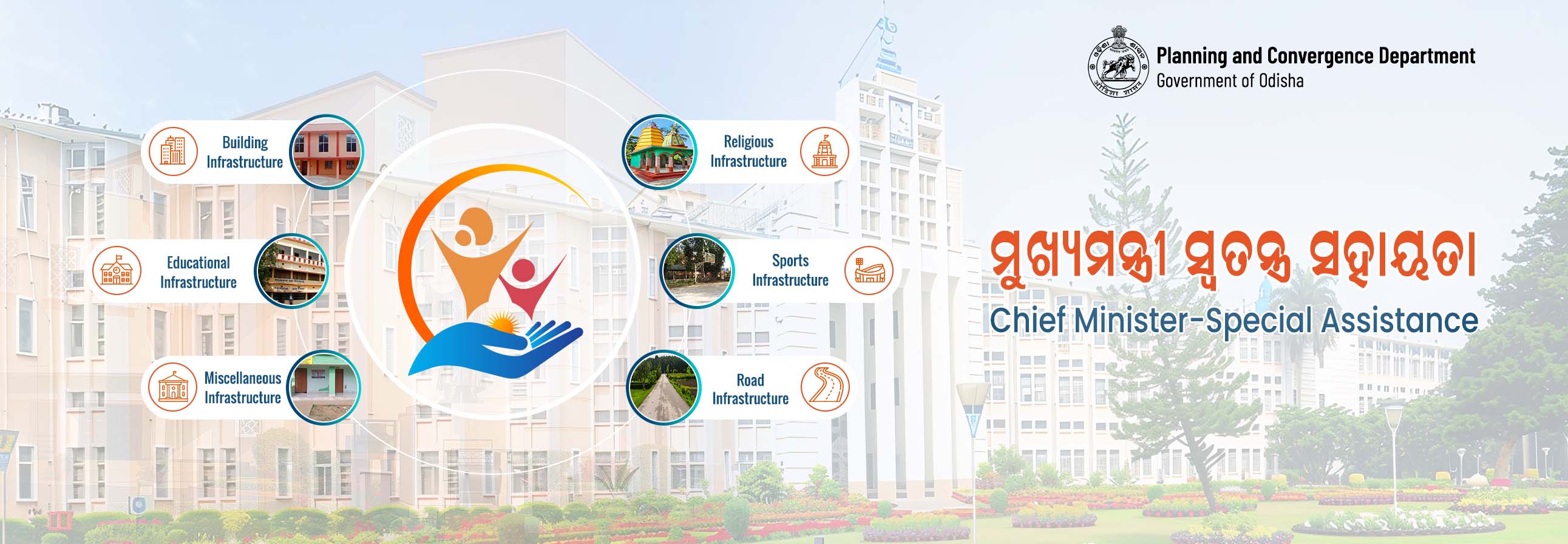











Through this scheme, Government of Odisha is striving to foster critical infrastructure, including roads, water supply, sanitation, and electricity, alongside affordable housing. With an aim to ensure that every home is a part of well-planned, sustainable ecosystem that supports higher quality of life and growth for rural and urban populations alike.


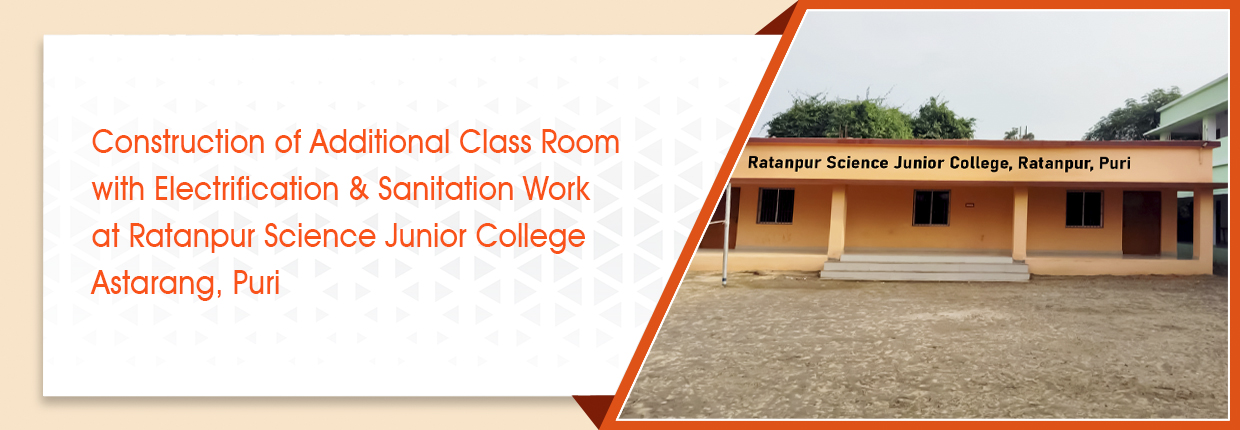
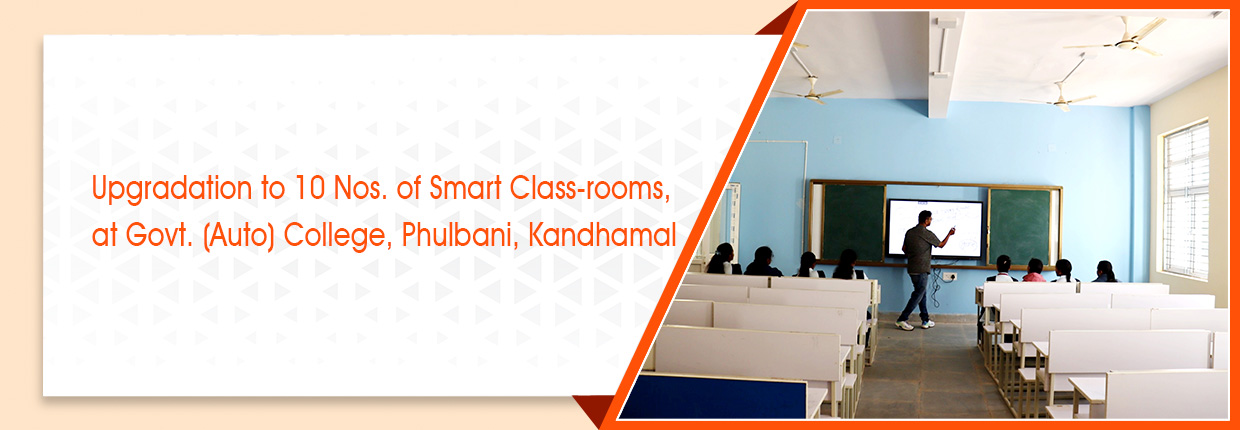
Government of Odisha is committed to build a strong foundation for education in rural and marginalised areas by developing modern school buildings, providing essential amenities, and ensuring connectivity, with an aim to create a conducive learning environment for students across the state. This initiative supports the governments vision of equitable access to quality education for all, ensuring that every child has the opportunity to succeed.


Development of essential miscellaneous infrastructure that supports overall community well-being. This includes the construction of healthcare facilities, community centers, drainage systems, and road accessibility by strengthening these critical services, Govt. ensures that every village and urban locality benefits from a holistic approach of development, fostering superior standard of living for all citizens.


Government of Odisha is working towards enhancing religious infrastructure across the state. It includes the renovation and construction of temples, community prayer halls, and other religious structures that hold cultural and spiritual significance. By preserving state’s rich religious heritage and ensuring these spaces are accessible and well-maintained; by doing so Govt. aims to foster community harmony and respect for diverse faiths, while supporting tourism and local culture.


Government of Odisha is constructing and upgrading sports facilities, including playgrounds, community sports centers, and multi-purpose stadiums, particularly in rural and semi-urban areas. By creating these spaces, Govt. aims to provide every citizen with access to sports, stimulating a culture of health, teamwork, and excellence in the state.


Government of Odisha is enhancing road infrastructure to improve connectivity in rural and urban areas. This includes building new roads, upgrading existing ones, and constructing bridges to ensure perennial access to different places of the state. Better roads reinforce economic growth, ease transportation and connect communities more effectively.

A state-level workshop was organised by the Planning and Convergence Department, Government of Odisha, on Wednesday to discuss the findings of the “Concurrent Evaluation of Functioning of District Mineral Foundations (DMF) and Implementation of DMF Projects in Angul, Jajpur, and Jharsuguda” districts. The workshop was chaired by Anu Garg, Development Commissioner-cum-Additional Chief Secretary to the Government of Odisha. The concurrent evaluation of the District Mineral Foundations (DMFs) in Angul, Jajpur, and Jharsuguda highlights that the DMF has become a transformative mechanism for inclusive development in Odisha’s mining-affected areas. Over 32,000 projects have been sanctioned across the state in DMF districts so far, out of which 13,244 projects and villages were sampled for evaluation. These projects largely focused on health, education, livelihoods, drinking water, and infrastructure—bridging critical resource gaps. The evaluation found high socio-economic returns from investments such as piped water, roads, health facilities, and skill development programmes. The DMF’s catalytic role is evident, with cost-benefit ratios showing particularly strong community impact in education and sanitation projects

A consultative workshop on Sustainable Development Goal-5 (Gender Equality): Reimagining Development through a Gender Lens – Inclusive, Safe, Sustainable was organised today by the Planning and Convergence Department, Government of Odisha in collaboration with UNDP at Hotel LYFE, Bhubaneswar.The workshop aimed at deliberating on pressing development issues around gender equality with a multi-stakeholder approach, focusing on mobility and accessibility, women’s economic empowerment, gender-inclusive development, and community engagement. Delivering the welcome address, Manish Agarwal, Additional Secretary, Planning and Convergence Department, highlighted the objectives and expected outcomes of the workshop.
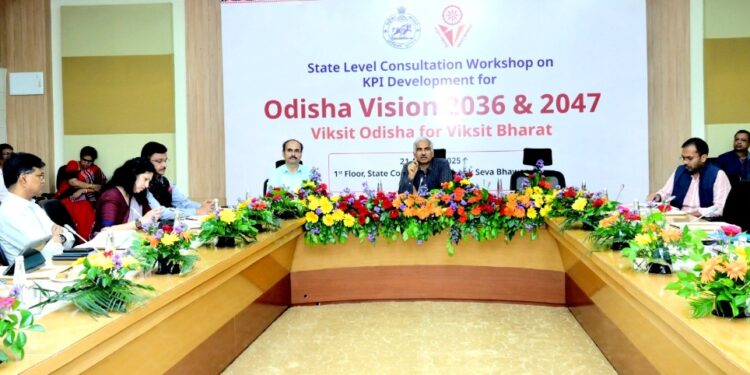
Organised by the Planning and Convergence Department in collaboration with the Strategic Support Unit (SSU) under the Office of the Chief Secretary, the workshop brought together top officials to craft a roadmap for Odisha’s transformation into a growth engine for India by 2047. Chief Secretary Manoj Ahuja, joined by Additional Chief Secretaries, Principal Secretaries, and Commissioner-cum-Secretaries, led the inaugural session, emphasising a growth mindset and shared understanding as cornerstones for achieving the vision. The event also included Nodal Officers and technical experts from various departments, ensuring a collaborative approach to KPI development. In his keynote address, CS Ahuja highlighted that the vision, unveiled by the Hon’ble Prime Minister in the presence of Odisha’s Chief Minister, aims to position Odisha as a key contributor to Viksit Bharat. “The success of Viksit Odisha hinges on robust, data-driven accountability,” he stated, announcing the creation of a high-frequency Chief Minister’s Dashboard to monitor progress. He underscored the importance of a three-tier KPI framework—encompassing Outcomes, Outputs, Processes, and Sub-processes—developed with direct leadership and domain expertise from each department. To ensure strategic and technical precision, three-member teams from anchor departments, comprising Departmental Secretaries, Nodal Officers for Viksit Odisha, and senior officers with programmatic expertise, were formed. Ansuman Rath, Under Secretary to the Chief Secretary, presented a detailed KPI Development Toolkit, outlining the framework and guiding departments on the next steps for KPI finalisation and integration into the dashboard. Departmental leaders emphasised ownership, convergence, and collaboration as critical to the vision’s success. DK Jena, OSD cum Special Secretary, Planning and Convergence Department, welcomed participants and thanked the leadership for their guidance in drafting the Vision Document. The workshop concluded with discussions on actionable steps to refine KPIs, ensuring they align with Odisha’s long-term goals of inclusive growth and sustainable development. As Odisha forges ahead, the KPI framework will serve as a cornerstone for tracking progress and achieving the transformative vision of Viksit Odisha by 2036 and 2047.